
Bankes Family Ancestors of Corfe Castle and Kingston Lacy
My great-great-grandmother was Mary Frances Bankes, who married Philip Pennant Pennant in 1862. Her ancestors were the Bankes family of Corfe Castle and Kingston Lacy in Dorset.
This is a summary of my Bankes family ancestry, with brief biographies of my great-grandfathers and grandmothers. I’ve focussed on those in my direct family line, rather than attempt to cover all the Bankes history of Kingston Lacy. The original portraits can be seen at Kingston Lacy house, near Wimborne, Dorset, which is now in the care of the National Trust.
Sir John Bankes (1589-1644)
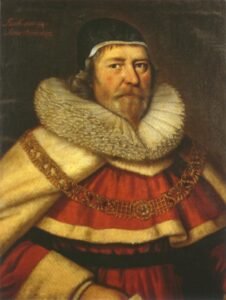
Lord Chief Justice, Attorney General and a member of the Privy Council for King Charles I. He purchased Corfe Castle and the Kingston Lacy estate in 1636. During the Civil War Sir John remained loyal to the king although he was respected by most parliamentarians as a principled man trying to uphold the law.
This portrait was painted by Gilbert Jackson in 1643, when Sir John was 54, a year before he died. He is portrayed in his robes as Lord Chief Justice. It hangs in the library at Kingston Lacy, and there is also a larger three-quarter length version which is now in the National Portrait Gallery.
Sir John and his wife Mary were my 8x-great-grandparents. They had thirteen children: six sons and seven daughters. Their eldest son John died in 1656 at the age of 30, and after the restoration, the Corfe Castle estate passed to their second son Ralph.
Lady Mary Bankes (1598-1661) nee Hawtrey
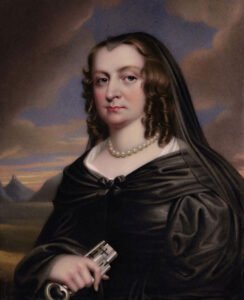
Sir John’s wife, Mary, became famous for defending Corfe Castle during the Civil War. The castle was besieged twice, the second time for 48 days in 1645, until it was taken by Parliamentarian forces disguised as Royalists. The castle itself was blown up in 1646, left in the ruined state that it is today.
This painting is an enamel miniature by Henry Bone made in 1800, after the original painting by John Hoskins, c1650-1660. (The original painting is not at Kingston Lacy.) ‘Brave Dame Mary’ is depicted holding the keys of the castle, and the castle itself is in the background on the left.
It hangs in the drawing room with the rest of the collection of Bone miniatures, purchased by William John Bankes as a job lot, given initially to his brother Edward Bankes, who subsequently returned them to Kingston Lacy after William’s flight into exile in 1841.
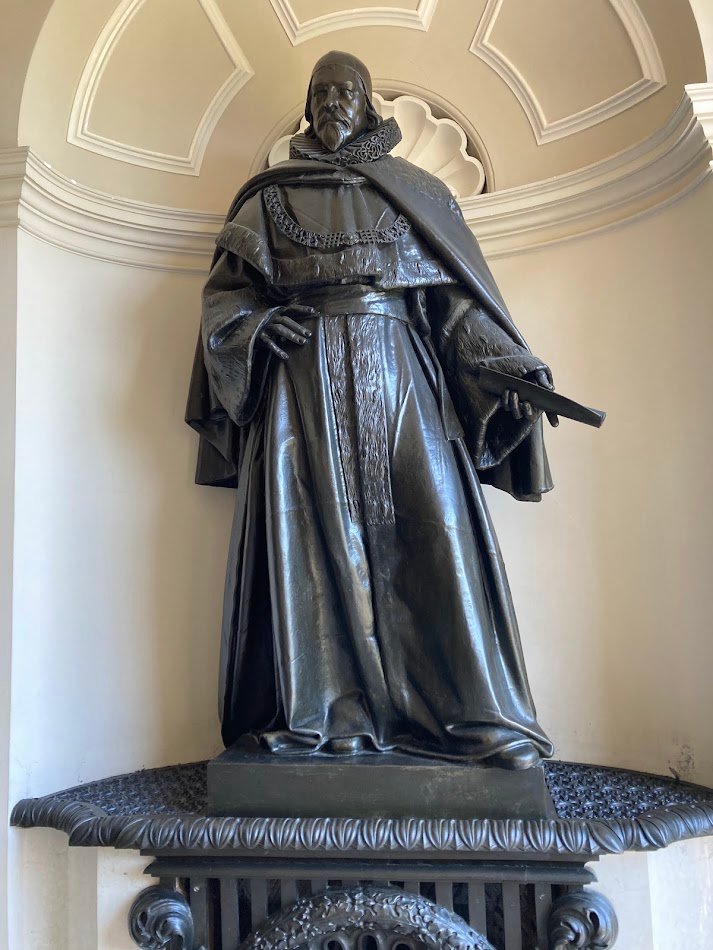
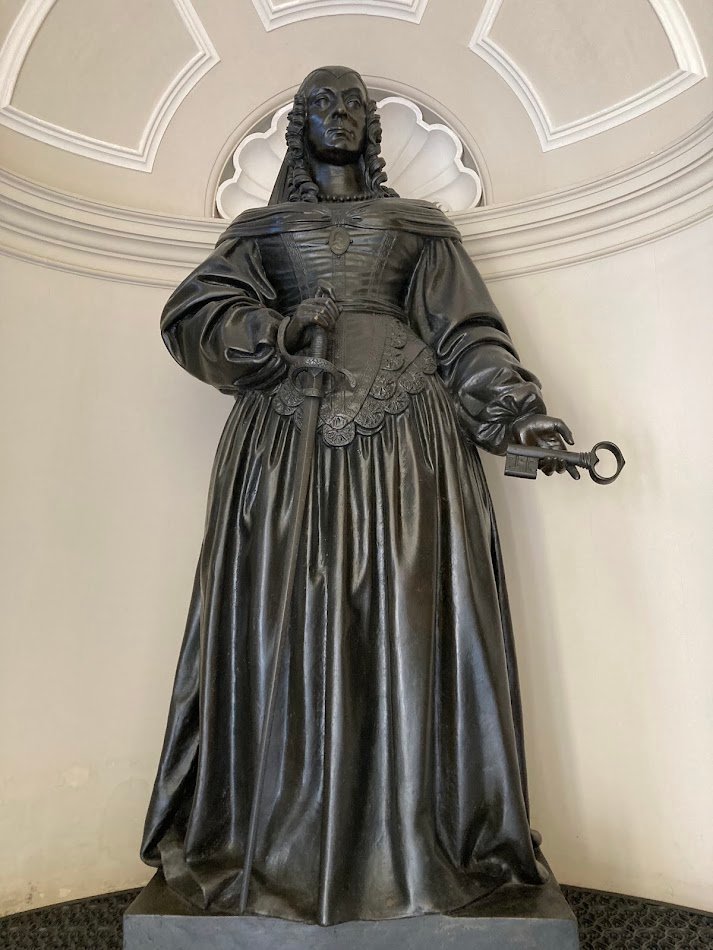
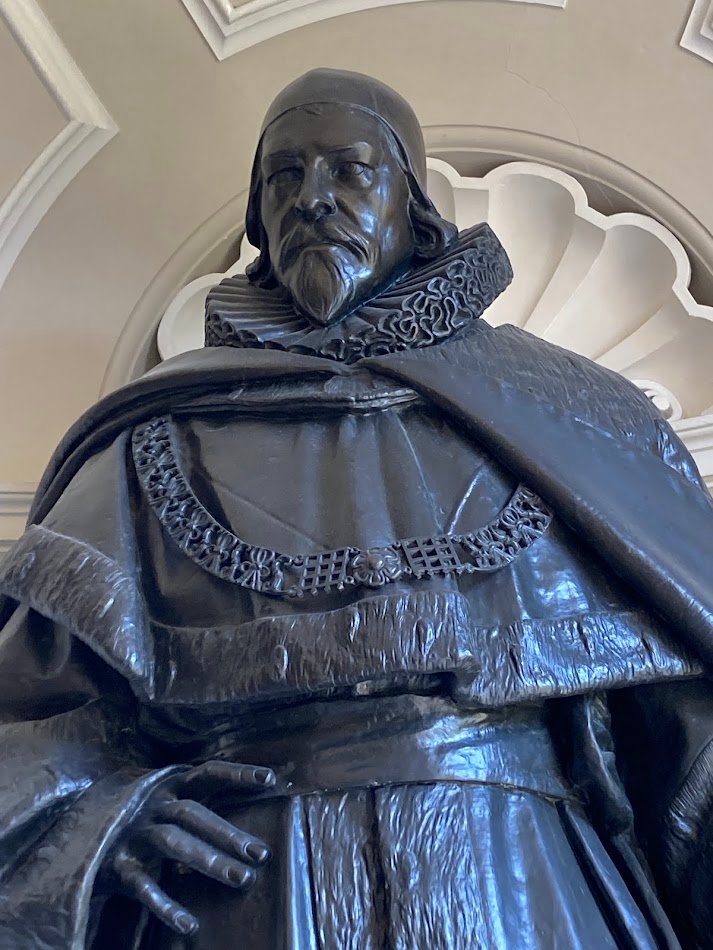
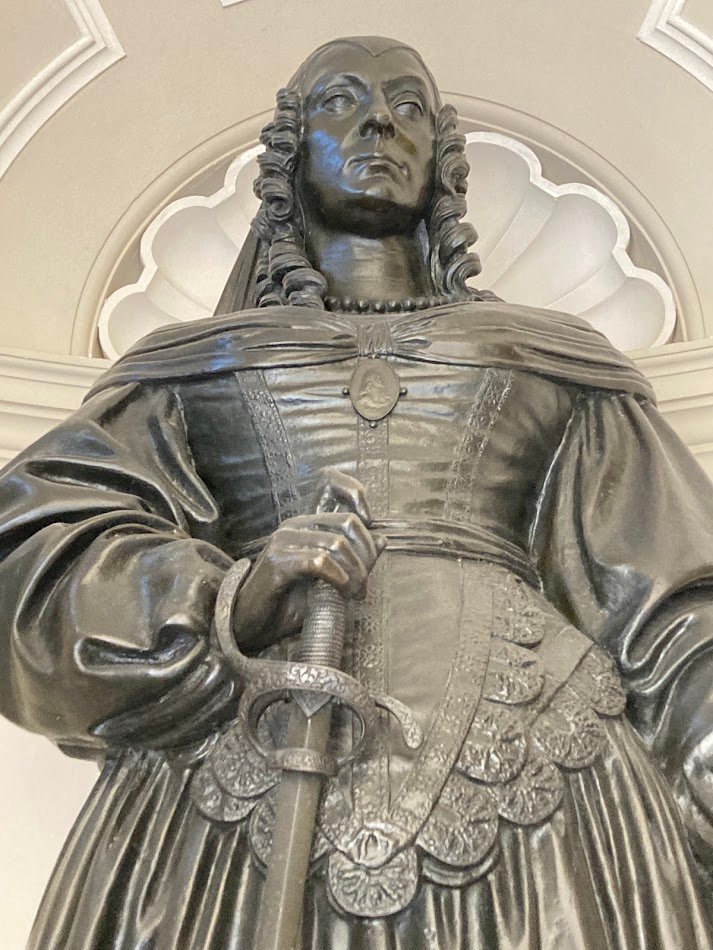
Bronze sculptures of Sir John and Lady Mary by Baron Carlo Marochetti, commissioned by William John Bankes in 1853-5, based on the original portraits. These stand opposite each other on the half-landing of the marble staircase, along with another bronze of King Charles I. Sir John is holding a legal document, Lady Mary has a large sword and the key of Corfe Castle.
Sir Ralph Bankes (1631-1677)
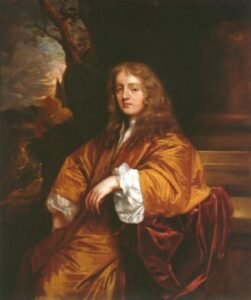
Second son of Sir John and Lady Mary. Followed Charles II in exile in France during the Civil War. Knighted in 1660, after the restoration of the monarchy. Built Kingston Lacy house in 1663, as a compact symmetrical red-brick mansion, designed by Inigo Jones. But because the cost of building put Sir Ralph seriously in debt, he was obliged to let the house, and it wasn’t actually occupied by the Bankes family until 1693 (after Sir Ralph’s death).
Portrait by Sir Peter Lely, c1655 – when Ralph was about 24. He is portrayed in the flowing robes of a Cavalier, with a fine head of fair/reddish hair, worn shoulder length. The portrait hangs in the library at Kingston Lacy, alongside other portraits by Lely of three of Ralph’s sisters.
Mary Brune (1646-1711)
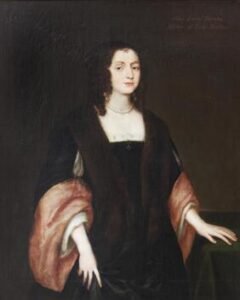
There is no portrait at Kingston Lacy (as far as I know) of Sir Ralph’s wife Mary (nee Brune). This portrait is at Sudbury Hall, Derbyshire, showing Mary as a young lady. probably before her marriage.
When Ralph and Mary were married in 1661, she was the heiress to 3/4 of the Athelhampton estate in Puddletown, near Dorchester. Athelhampton Hall was built in 1485 by Sir William Martyn, who was Mary’s 6x-great-grandfather, and my 15x-great-grandfather.
After their marriage, Sir Ralph and Mary sold the Athelhampton estate to help finance the building of Kingston Lacy.
Sir Ralph and Mary were my 7x-great-grandparents. They had one son, John, who inherited the Kingston Lacy estate, and one daughter, Mary.
John Bankes (1665-1714)
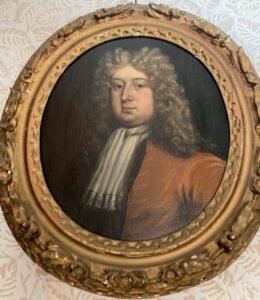
Only son of Sir Ralph and Mary. MP for Corfe Castle, served in eight parliaments. Lived at Kingston Lacy. Died in tragic circumstances on 14 July 1714, while attempting to lift a blunderbuss hanging on his bedroom wall at Kingston Lacy when it discharged, shooting him fatally through the head.
This portrait is dated 1702, when John was 37. He is portrayed wearing a long wig, and a brown velvet coat. It hangs in the South-East Bedroom at Kingston Lacy, along with a matching portrait of his eldest son John, who was aged 10 at the time.
Margaret Parker (1665-1730)
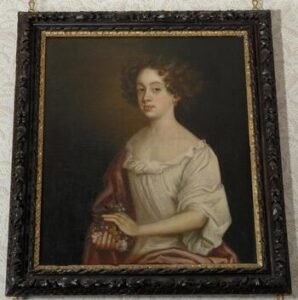
John married Margaret Parker (c1665-1730). This portrait from c1680 shows her as a girl of 15 or so.
John and Margaret were my 6x-great-grandparents. They had five sons and two daughters. Their eldest son, John Bankes (1692-1772) became the next owner of Kingston Lacy after his father’s death. There are three other portraits of him in the house, which I haven’t included here, because he was not a direct ancestor. John remained a bachelor. I am descended from his younger brother Henry.
Henry Bankes (1698-1776)
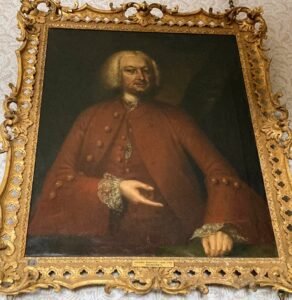
Second son of John and Margaret. Lawyer, became Kings Counsel and Commissioner of the Customs. Lived most of his life in London. Became owner of Kingston Lacy in 1772, at the age of 74, after the death of his elder brother John, who never married.
Married twice: first to Eleanor Symonds. They had no children.
There are two portraits of Henry at Kingston Lacy – one painted when he was 36, and the one above, by Richard Roper in 1764, when Henry was 66. In both paintings he is portrayed wearing a full wig and a quite similar-looking brown jacket and waistcoat.
Margaret Wynne (1724-1822)
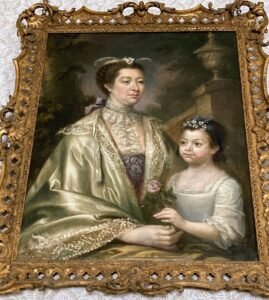
Henry’s second wife was Margaret Wynne, daughter of John Wynne, Bishop of Bath and Wells. She subsequently inherited the Wynne family home, Soughton Hall in Flintshire.
Henry and Margaret were my 5x-great-grandparents. They had two sons and a daughter, but their first son John died when he was just 10, so after Henry’s death the estate passed to their second son, also Henry.
The portrait above shows Margaret and their daughter Anne, painted by Richard Roper at the same time as his portrait of Henry. Margaret was then 40 (26 years younger than her husband!), and Anne just 5 years old. Both these portraits hang in the South East bedroom at Kingston Lacy
Henry Bankes (1757-1834)
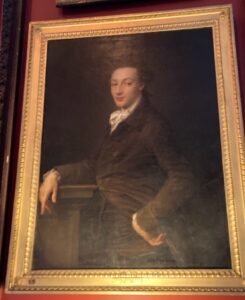
Second son of Henry and Margaret. Inherited the Kingston Lacy estate when he was 19. MP for Corfe Castle 1780-1826, then MP for Dorset. Trustee of the British Museum. Offered a peerage by George IV, but declined. Lifelong friend of Wilberforce and William Pitt. Served as an active MP for over 50 years, well into his seventies, and became known as ‘Old Bankes’.
This portrait is from 1779, when Henry was 22. It was painted in Rome, while Henry was on his Grand Tour, to send home to his mother, who was by then widowed. It was painted by Pompeo Batoni, the most famous portrait painter in Rome at the time. However, Henry described it as ‘a melancholy cold picture, whose only merit is being simple and having nothing offensive.’
Frances Woodley (1760-1823)
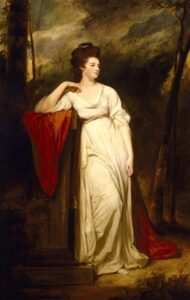
Henry married the society beauty, Frances Woodley in 1784. She was described as ‘one of the most remarkable beauties of the day’. The Gentlemen’s Magazine reported: ‘This lady in 1781 shone at Bath in the first circles of fashion; she drew all eyes and warmed all hearts.’
This full-length portrait of Frances Woodley, aged 20, by George Romney, was painted in 1781, before her marriage to Henry. She is elegantly posed, dressed in white, edged with gold. This picture occupies pride of place in the centre of the drawing room wall at Kingston Lacy. (This was the ballroom in Henry and Frances’ days.)
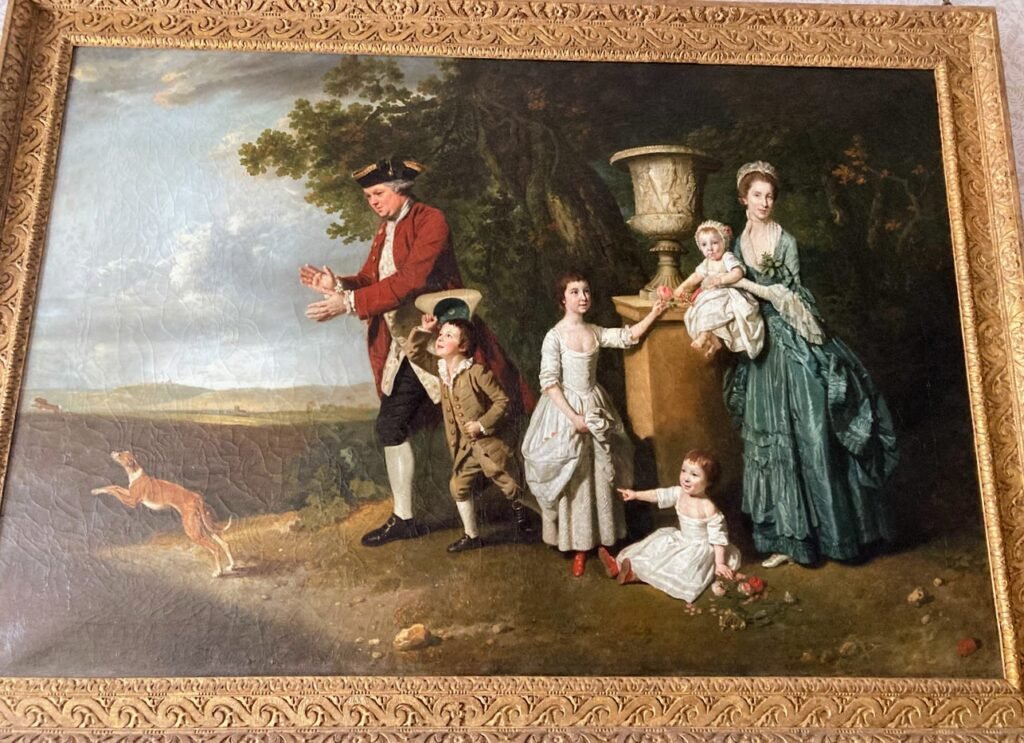
Also in the South-East bedroom is this Woodley family group portrait, c1767, with Frances as a girl in the centre. Her father William Woodley MP (1728-1793) had just been appointed Governor of the Leeward islands. Her mother Mrs Frances Woodley (1737/8-1813) holds baby son John. Frances, then about 7 years old, offers him a rose. Younger daughter Harriet seated, and elder son William next to his father. About 17 years after this painting, the young Frances became Mrs Henry Bankes.
Henry and Frances, my 4x-great-grandparents, had six children: four sons and two daughters. Tragically, their eldest son Henry died at sea, aged just 21, en-route to Sicily to join his regiment.
The next eldest was William, who was a notable explorer and adventurer and art collector. He travelled extensively in Europe and to the Orient and Egypt, and collected the largest private individual collection of Egyptian artefacts in the world. When he succeeded his father as owner of Kingston Lacy in 1834 he radically transformed the house from the red-brick original to the stone casing we see today. He also remodelled all the main rooms, raised the ceilings and installed the grand marble staircase. In his personal life he was good friends with Lord Byron, and was infamous for his wild, extravagant lifestyle. He fled from the UK in 1841, after being indicted for homosexual behaviour, which carried a potential death penalty in those days. William lived the rest of his life in exile in Italy, continuing to buy art and sending it back to fill his beloved Kingston Lacy, with weekly instructions about how his house should look. From afar, William created the Kingston Lacy that we see today.
Meanwhile the next son George became for fifteen years the de-facto squire of the estate in his brother’s absence, before inheriting fully when William died in 1855. George and his wife Georgina-Charlotte (nee Nugent) preferred to live mainly at Studland Manor House, rather than Kingston Lacy itself. They had eleven children, and their descendants continued to own the Corfe and Kingston Lacy estate until it was bequeathed to the National Trust in 1981.
Henry and Frances’ youngest son was Edward, who was my great-great-great grandfather. Edward spent his childhood at Kingston Lacy, but moved away when he grew up. Therefore my own family history diverges from the Bankes of Kingston Lacy from this point onward.
Rev. Edward Bankes (1794-1867)
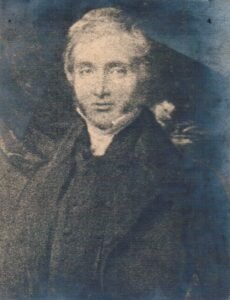
Youngest son of Henry and Frances. Held multiple clerical positions, including Canon of Gloucester Cathedral, Canon of Bristol Cathedral, Rector of Corfe Castle, and Chaplain-in-Ordinary to George IV, William IV and Queen Victoria. JP and Deputy Lieutenant for Flintshire.
Inherited the Soughton Hall estate in Flintshire in 1941, when his brother William went into exile and divided his property between his brothers.
Edward married twice: first to Lady Scott, the daughter of the Lord Chancellor, John Scott, Earl of Eldon. They had three sons and one daughter.
There is no portrait of Edward at Kingston Lacy, as far as I know. All I have is this rather grainy image of a painting from 1841, when Edward was 47.
Mary Frances Pennant (1843-1923) nee Bankes
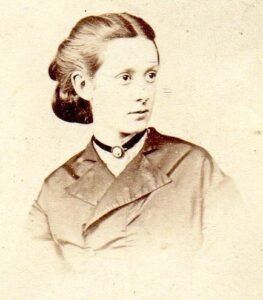
After the death of his first wife, Edward married Maria Rice, the daughter of Edward Rice, Dean of Gloucester Cathedral. I don’t have a photo/portrait of Maria.
Edward and Maria lived mainly in the Cathedral Close at Gloucester. His eldest son from his first marriage, John Scott Bankes, lived at Soughton Hall, and inherited it after Edward’s death.
Edward and Maria had five daughters, the second of which was Mary Frances Bankes who grew up to marry Philip Pennant Pennant in 1862 and became my great-great-grandmother. This photo of her is from the late 1800s, I believe.
For further reading I recommend Viola Bankes, ‘A Dorset Heritage: The Story of Kingston Lacy’. This was written in 1953, at a time when all the treasures and art of Kingston Lacy that she remembered from her childhood were inaccessible to public view. I also recommend the National Trust Collections website, which has a huge catalogue of art and artefacts, and an excellent search facility to find specific items.
It’s fantastic that the house, the art collection and the Bankes family history have all now been preserved by the National Trust, and open to all.